
Don’t you love sitting in an hour-long meeting where somebody is reading off the text of their carefully constructed slideshow? No, me neither. And in fact, I think in almost all cases these are an incredible waste of time.
Problem 1: Slideshow favor presentation over content
When somebody makes a slideshow, they spend an awful lot of time worrying about the way the information is presented on the slides. They might give it a particular theme, move around stuff, increase type size, add images. Sometimes funny, sometimes terrible, usually unnecessary.
Regardless, what really happens is that there’s at least one person in the company that worries about how information looks rather than the inherent value of that information.
Beyond this, it’s not just the fact that time is wasted on creating a particular presentation. It also means that the information is chunked in a way that suits either the size or design of the slides or simply the preferences of whoever made those slides. And that information might be better chunked in a different way or not chunked at all. It might be necessary to see it all in its entirety.
And we see this happening in meetings where you have to ask the presenter to go back a few slides or go forward a few slides just so that you have the context for the question you might ask or the comment you might make.
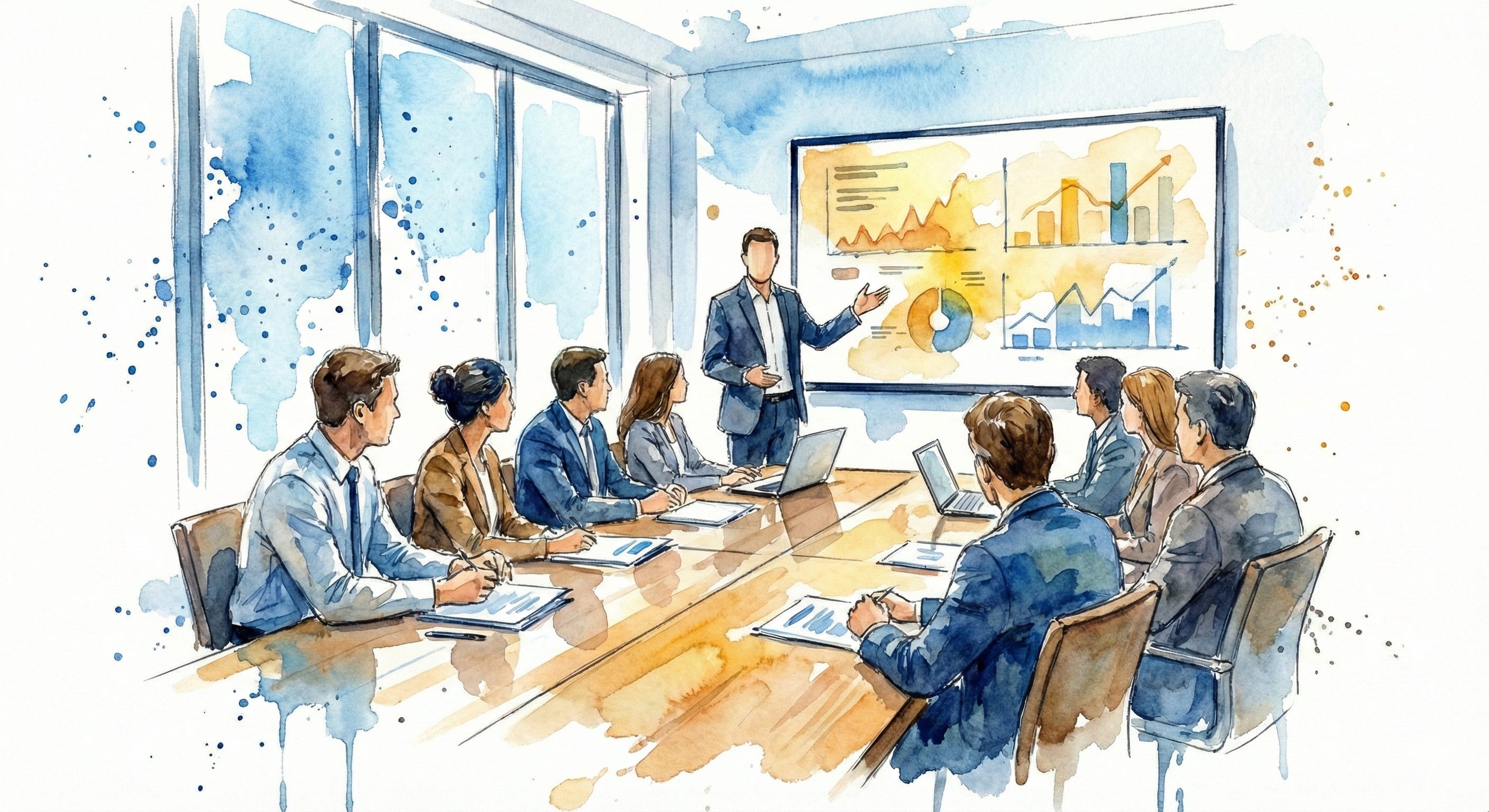
Problem 2: This could’ve been an email
The other large problem with internal presentations, in particular slideshows, is that they force a meeting into this passive viewing and listening exercise where really all of that could have happened before the meeting, because there’s no inherent value in listening to somebody narrate their story in real time. Rather, one could have just done the exact same thing, recorded themselves, and sent the video over to everybody else.
I recommend using Loom for this, which I think is a very good tool. But nonetheless, there’s no reason for everybody to synchronously attend really what is a passive listening exercise.
Beyond the synchronous nature, again, the content of a slideshow can simply be represented in a text file. In other words, you can literally just write a document or an email and share that with all the participants in advance of the meeting. It’s going to save you an awful lot of time because you don’t actually need to worry about the presentation.
The Solution
And that really is the solution to these passive internal presentations that waste everybody’s time.
Share a document with all participants that contains all contextual information, or at least links to contextual information, that talks through the things you want to discuss and makes the points that you want them to make and the takeaways.
In that document, you have to make sure to allow at least comments so people can comment in line to ask for clarifications that can be handled in advance of the meeting.
At the end of the document, if there are things that need to be discussed in the meeting, include them clearly. This is to be discussed and this is to be decided upon.
What you will find in practice is that in many cases these items will be handled in advance of the meeting, therefore allowing you to not have the meeting, which I think we’ll all be very happy with.
Long meetings == disengaged participants
I think it’s kind of hard to defend that participants in any given meeting, especially if it’s a meeting with more than two people, that these people are fully engaged and focused during the entire meeting.
If your meeting is held in real life and you’re sitting together in a meeting room, you will find that people are often checking their laptops or their phones at the same time or simply spacing out.
In a remote environment, this is even worse because people only really appear in front of the camera. You cannot see their screen, and so they can shamelessly do entirely different things. And if they turn off the camera, even more so.
And I don’t even think that this is unreasonable. I think it is unreasonable to expect that people sit through a passive listening exercise for a really long period of time when all of this could have been avoided. Again, this could have been an email.
The Amazon trick
There’s just one problem, which is: you might send materials to review in advance and do all the things that I recommended you do, and people show up to the meeting unprepared, so they don’t have the context.
Now, Amazon found this as well many, many years ago, and what they did is a very smart trick.
At Amazon, they have, of course, many meetings. And in those many meetings, there are very busy people that maybe don’t have the time to or can’t find the time to review all the materials that were sent in advance. And so rather than doing one of two things—be that sitting passively in a meeting, listening to somebody present, or being able to review material in advance—what they do is at the start of the meeting, everyone spends a few minutes reading the documents that were prepared for the meeting. This way, everybody will have a shared context and can immediately start an engaging discussion.
And so a 30 minute meeting might look like this: the first five minutes, everybody sits reading quietly. The next 25: active discussion.
And so rather than having to listen to somebody present something at their pace, you can just read the document at your pace, look at your phone until everybody’s ready, and then have an engaging meeting where everybody can truly contribute.
I think this is a very interesting model, and I’ve tried it a few times, and I found that it generally works quite well.
And so if you find that people don’t read materials that were shared in advance, give this a try.
But please stop passively presenting.